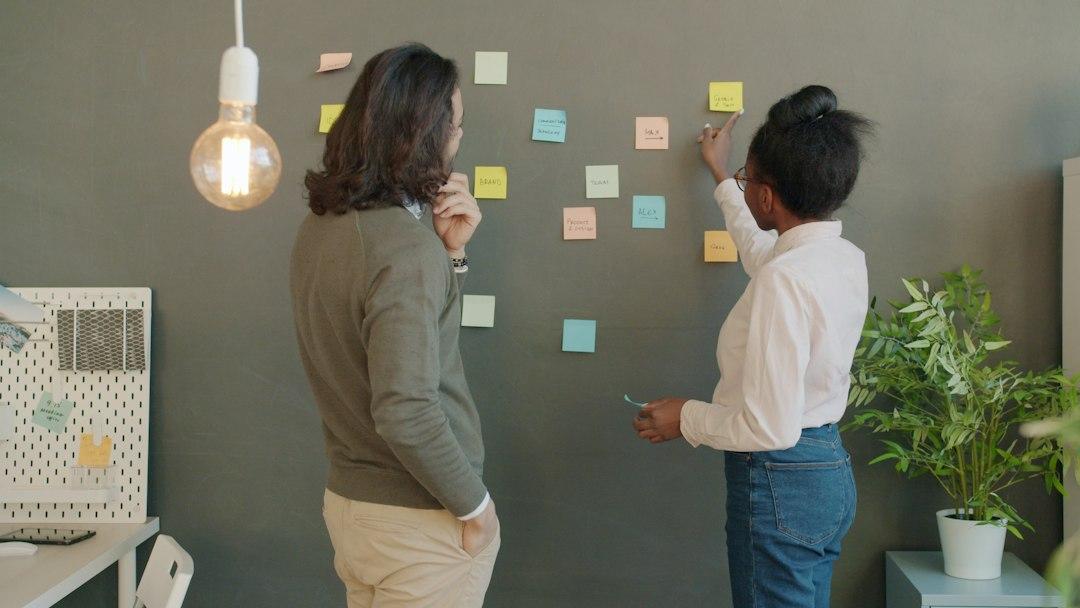
Monday at a five-person studio starts with a group chat full of polite guessing. The founder has 60 unread emails, a promise made on a Friday call that nobody wrote down, and two clients who each believe they are the only client. By 10am the team has had three conversations about the same deliverable in three different apps.
The fix is not another meeting. It is a brief: one page, generated from messages you already sent last week, in about the time it takes to drink a coffee.
The Monday status meeting is a search problem wearing a calendar invite
Four people in a 45-minute meeting is three hours of billable time before anyone has touched a deliverable. Prep is another 20 minutes each. And the meeting is usually stale by 11am, because the useful information was never in the room. It was in the email thread from Thursday and the WhatsApp message from Saturday night.
What actually costs you is that the founder becomes the index. Every question routes through the one person who remembers. Did we send the revised scope to Priya. Did the photographer confirm the venue. You answer that question 11 times a week and call it management.
I have trained more than 90,000 people on software and operations, and the pattern in small service teams never really changes. Nobody lacks information. They lack a single place where the week's information has been sorted.
Pick three input streams and refuse the rest
Choose the channels where client work actually happens. For most 1 to 5 person businesses that is email, Slack, and WhatsApp, in that order of formality. Add a fourth and the brief gets noisy and you stop reading it.
Concrete setup:
- Gmail: create a label called Clients, then a filter that applies it to every client domain automatically.
- Slack: create #client-updates and move client chatter there. DMs are where information goes to die.
- WhatsApp Business: use labels per client, and ask clients to keep project talk in the labelled thread instead of scattering it across voice notes.
Then one small automation. Zapier or Make can drop new labelled emails and Slack posts into a single Google Doc every Friday afternoon. If you don't want to pay for either, a saved Gmail search does the job: label:clients newer_than:7d. Slack search works the same way. For WhatsApp, export the thread.
The rule that makes this hold: if a decision happened on a call or in a DM, it does not exist until someone writes one line into the channel. That is not bureaucracy. That is the whole point.
The 12-minute build
Minutes 0 to 3, pull. Run the saved search, grab the Slack channel, export the WhatsApp threads. Do not read closely. You are gathering, not reading.
Minutes 3 to 8, sort. Paste everything into Claude or ChatGPT with a prompt that has a shape. Mine looks like this:
You are my ops lead. Below are last week's client emails, Slack messages, and WhatsApp threads. Produce a brief in three sections. Promised: things we told clients we would deliver. Pending: things we are waiting on them for. Problems: anything that slipped or sounds like dissatisfaction. For each item give the client name, one line of what happened, one owner, and one date. Maximum 12 items. Cut anything that is not a decision or a deliverable.
Minutes 8 to 12, edit. This is the part that matters. Delete anything you cannot name an owner for. If an item has no date, either give it one or kill it. Twelve items is a ceiling, not a goal. On a good week you will have six, and that is a signal the week is under control.
If the first pass comes back with 30 items, that is not a tool problem. That is a week of unsaid things finally showing up in one place. Sort it, ship the top 12, and expect next Monday to be lighter.
Paste the final version into Notion, a Google Doc, or a Slack canvas. Post at 7am.
The rule I keep coming back to: if it does not have an owner and a date, it isn't a task. It's a worry, and worries do not belong in a brief.
What a good brief actually looks like
Short. Under 200 words. Mine reads like this.
Promised
- Rivera account: revised scope doc, Dana, Tuesday
- Chen shoot: final gallery link, me, Wednesday
Pending
- Okafor: waiting on brand assets since Thursday, follow up today
- Lin: invoice approved, payment expected Friday
Problems
- Patel call Friday got tense about turnaround. Needs a real conversation, not an email. Me, today.
This week's one thing
- Dana: pricing page for the new package
- Me: hire the contract editor
That is the whole document. No agenda, no icebreaker, no round robin of any blockers. Everyone reads it in 90 seconds and knows what they own.
The async standup that replaces the meeting
Post at 7am. Everyone replies by 9am with one line: either got it, or a blocker. That is your AI async standup, and it costs about six minutes of collective time instead of three hours.
Two failure modes worth knowing about. First, the brief goes quiet the moment people drift back into DMs. If the team stops writing in the shared channel, the brief has nothing to sort and you will be back to guessing within a month. Second, some things should never live in a document: a client who is unhappy about money, a scope conversation that needs a human voice, anything where the person needs to feel heard before they need a list. Those go to a 10-minute call. Not a doc thread.
Keep the calls you do have searchable, too. Fathom or Granola will transcribe and summarise them, which means a Friday client call turns into Monday brief material instead of a vague memory.
None of this needs an ops manager. It needs three channels, one prompt, and 12 minutes on a Monday. The tools are the easy part. The hard part is deciding the founder is not going to be the index anymore, and that the people who scale are the ones who can read.
If this resonates and you want to build this kind of infrastructure in your own business, the Mastermind is where we do the work live. You can learn more at mastermindshq.business, see how the Mastermind compares at https://www.mastermindshq.business/mastermindvsl, or start smaller with the workshop at https://workshop.mastermindshq.business.