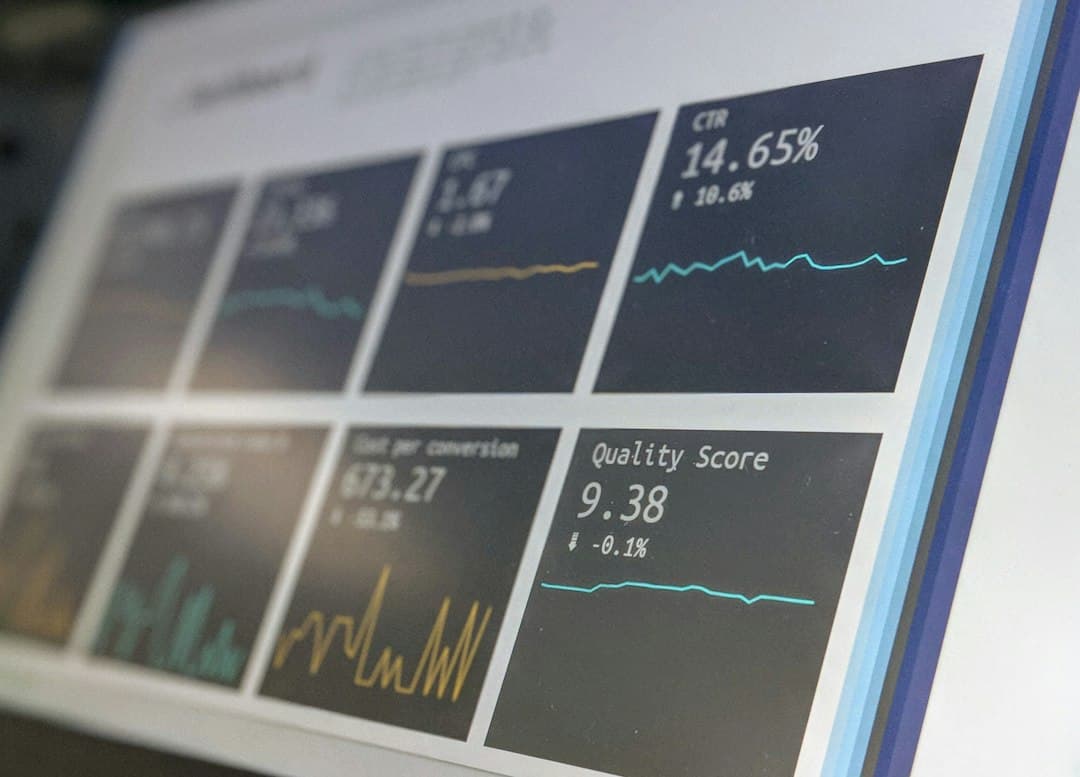
Most people track nothing, so their AI agents stay exactly as good as the day they were built. You track quality by logging every output, having the human who received it grade it, then fixing the prompt or the context and re-running the same tasks to prove the fix worked. I run 45 AI employees across multiple companies, and the ones that actually got better are the ones sitting inside a small feedback loop.
Why Do AI Agents Tend to Get Worse Over Time?
The default state of an agent is decay. Not because the model gets dumber, though it can when a provider updates it. Because your business changes and the agent does not.
We run wedding venues and resorts. I built a booking agent that answered inquiry emails and checked date availability. Week one it was excellent. Week six it promised a couple two dates we had already blocked for a private event, and nobody caught it for eleven days. The model did nothing wrong. It was working from a picture of our calendar that was three months old.
The second reason is what I call excitement-driven development. You build the agent, you show the team, you feel great, and then you move on to the next thing. The agent is busy. It is not useful. Those are different things, and the gap between them is AI agent quality control.
What Should I Actually Measure?
Measure finished jobs, not replies. A reply that sounds smart and a job that got done are two different numbers, and only one of them matters.
Pick three metrics. Five is the ceiling, and if you go past five, nobody looks at any of them.
- Completion rate: the percentage of tasks the agent finished with zero human edits.
- Correction rate: how often a human had to change the output before it went out. This is the one I watch most.
- Cost per completed task: total agent spend divided by finished jobs.
If you want two more, add escalation rate and time to done. Do not measure how impressive the writing sounds. I have watched people grade an agent on tone while it was quietly wrong about pricing every single time.
For the log, a Google Sheet or an Airtable base is enough to start. One row per task: agent name, task, output, human grade, timestamp. If you want deeper tracing, Langfuse and LangSmith both show the full chain of steps an agent took, which helps when the failure happened in step four and only showed up in step nine.
The last piece is a grade from the human who actually received the output. A number from one to five and a couple of words about why. That takes nine seconds and it is the most valuable data you will collect.
How Do I Build a Feedback Loop That Does Not Need Me in the Room?
This is the part people skip, because they think it means meetings. It is around 30 minutes a week.
- Route every output to one place. I use n8n, and Zapier works fine too. Every output lands as a row in Airtable with the fields above. If a full log feels heavy, start with one Slack channel where agents post their output and people react with a thumbs up or thumbs down.
- Ask the human who received the output to grade it. One click. Thumbs down plus one word on why. That is the entire ask, and if you make it bigger than that, it stops happening.
- Once a week, pull the bottom 20%. Look at the misses, not the wins. Wins feel good and teach you nothing.
- Cluster the misses before you fix anything. Nine times out of ten, three misses are the same miss. It is one missing fact, or one instruction that can be read two ways.
- Fix and version. Change the system prompt or add the fact to the knowledge file, then save the old version. You will want it back.
- Re-run your golden set. That is 20 to 30 tasks you keep forever with known-good answers. After every change, run them again. If your fix broke something else, you find out in ten minutes instead of three weeks.
That loop is continuous improvement for AI agents in the most literal sense. Small, weekly, boring, and it compounds.
How Do I Know an Agent Is Getting Better and Not Just Different?
Improvement is a slope, not a score. One week of numbers tells you almost nothing. Nine weeks of numbers tells you everything.
Our support agent started at a 41% correction rate. Nine weeks later it was at 12%. Three fixes caused most of that drop, not thirty. The other twenty seven changes were noise.
Two traps to watch for.
The first is the change that feels better but measures worse. You rewrite a prompt, the output reads cleaner to you, and completion drops four points. Trust the number over your taste. Revert it.
The second is false improvement. Output gets shorter, so it looks tidier and feels more efficient, while completion quietly falls. That is why you version every prompt and keep the score next to the version. Git if you are technical. A version column in Airtable if you are not.
Where Does Quality Control Live Inside an AI Agent Operating System?
Quality is a layer, not a chore you do per agent. That distinction is the whole difference between having 45 agents and having an AI agent operating system.
When your agents share memory and hand work to each other, one grading standard covers the whole fleet. One log catches every handoff. One golden set tests the chain, not just the individual link. If agent A writes the brief and agent B sends the email, grading B alone tells you nothing about where it went wrong.
I laid out that architecture in How to Build Your Own AI Agent Operating System, including the shared standards file and the weekly review that looks at the fleet instead of one agent at a time.
FAQ
How often should I review AI agent quality?
Weekly for the bottom 20%, monthly for the trend line. Do not do it daily. You will burn out and stop, and an abandoned review is worse than no review, because it feels like a system that is working.
How many test tasks do I need in a golden set?
20 to 30 is plenty. Fewer and you miss regressions. More and you stop running them. Keep them boring, real, and written down where anyone on the team can find them.
Can I automate the grading?
Partly. A second agent can grade the first, and it is good at catching obvious misses: missing facts, wrong dates, broken formatting. A human still has to grade taste and judgment calls. Do not automate the thing you actually care about.
Start With Three Metrics and One Slack Channel
This only has to be built once. If any of it sounds like a lot, remember that the version most people run is zero tracking, and that is why their agents plateau in week two and never move again.
I wrote the full playbook for this. How to Build Your Own AI Agent Operating System walks you through the exact architecture I use, step by step. You can get it at a.mastermindshq.business/ai-os-book.