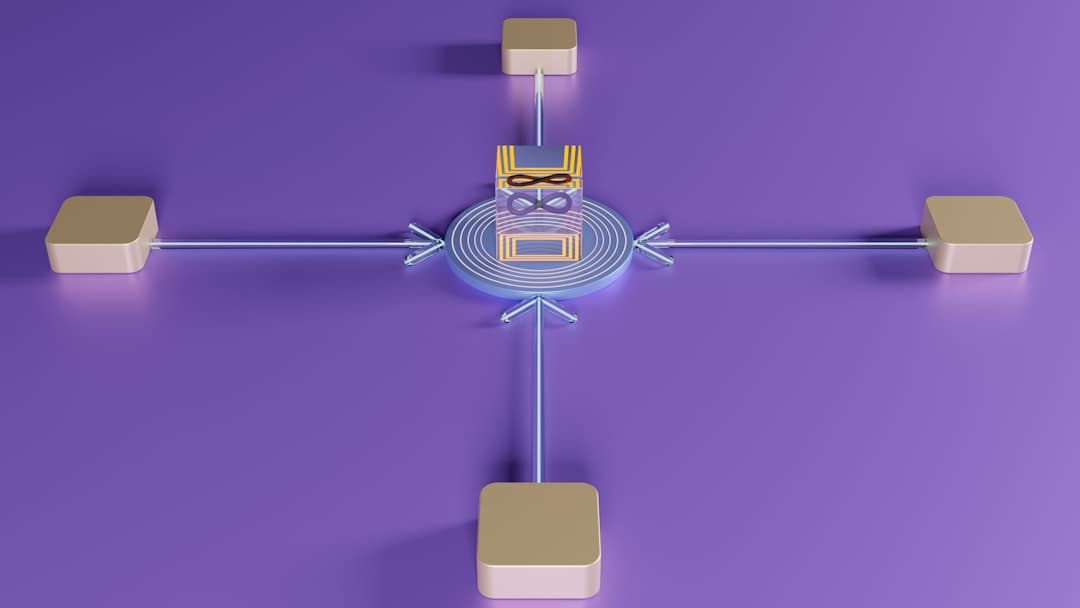
If you have ever tried to chain two AI agents together, you know the pain. The answer is to stop giving agents conversations and start giving them a shared workspace. You coordinate multiple AI agents by designing a single source of truth that every agent reads from and writes to, so context handoff between AI agents becomes a file reference, not a retelling.
Why do context handoffs between AI agents fail?
Most people try to coordinate agents the way they coordinate interns. They forward the same email thread and expect the new person to figure it out. AI agents are not people. Every API call is stateless. When you send a prompt, that is the whole universe. If you copy the entire history into each prompt, you blow up token limits, you spend too much money, and you still lose nuance because the model has to guess what matters.
The fix is to externalize state. Instead of embedding context into the prompt, you put it into a persistent object that all agents can access. I call this "state as a document." Agent A writes a structured update to a JSON file. Agent B loads that file, does its part, and updates another field. The next agent picks up exactly where the last one left off. No one has to recap.
What does a multi-agent workflow look like with a shared context layer?
Let me give you a real example. A client of mine runs a content operation that produces daily articles. They had four agents in sequence: research, outline, draft, review. In the old setup, the draft agent would get the outline but lose the research details. The review agent would get the draft but have no idea what the original goal was. It was a disaster.
We rebuilt it with a simple Postgres table. Each row represents one article project. Columns include the brief, the research notes, the outline, the draft, the review comments, and a status field. Each agent receives a project ID, loads the row, does its work, and saves its section. The status field tells the system which agent runs next. That is AI agent orchestration that actually works. It turns a fragile prompt chain into real AI agent collaboration.
The key is that the context is not passed from agent to agent. It lives in one place, and every agent reads the source of truth. That is the whole point of a shared context layer.
How do you build this pattern with modern tools?
You have options. I have used LangGraph for complex branching workflows where agents need to decide the next step based on the current state. LangGraph lets you define a graph of nodes and edges, and you can pass state through the graph without losing anything. It is built for exactly this problem.
For simpler linear processes, CrewAI is a solid choice. You define tasks and agents, and it handles the handoffs under the hood. But I still recommend customizing how context is stored because CrewAI's default memory can be shallow.
If you want full control, build your own orchestration with the OpenAI Assistants API. You manage a thread and store state yourself in a database. That is more work, but for long running workflows with lots of nuance, it is worth it.
When I build AI agents for business, I always start with the state schema, not the model. Here is a concrete three step pattern I use with clients:
- Define your state schema. Write down every piece of information that needs to survive between steps. For a sales workflow, that might be lead details, objections raised, and next action. For a content workflow, it is the brief, the draft, and the feedback.
- Pick a storage layer. A Postgres table, a JSON file in S3, or even a Google Sheet for simple cases. The storage layer is your system of record.
- Build agents that read and write. Each agent has one job. It loads the current state, does its task, and saves a new version. No agent ever invents context from memory. It only trusts the state.
This pattern scales from two agents to twenty. The more agents you add, the more important the shared context becomes.
What mistakes should I avoid when coordinating AI agents?
The biggest mistake is overloading the prompt. If you try to cram all context into every prompt, you will hit token limits and lose important details. Use the state store instead.
Another mistake is letting agents talk directly to each other without a mediator. When agent A sends a message to agent B, you create a hidden conversation that you cannot monitor. Instead, route everything through the shared state. That way you have an audit trail.
A third mistake is not versioning your state. If an agent writes a bad update, you want to be able to roll back. Save a new version each time, or use a tool that does that for you.
Finally, do not over-engineer. You do not need a complex orchestration framework for a simple two step workflow. Start with a shared file and one agent. Add agents incrementally as you see value.
What else should you know about coordinating AI agents?
Do I need to learn a framework like LangGraph to coordinate AI agents?
No. For many workflows, a shared JSON file and two well-crafted prompts are enough. Frameworks help when you have branching logic or many agents, but the core idea is the same: externalize state.
How do I handle conflicting updates from two agents?
Give each agent its own section of the state, or use a version number and a last write wins policy. For critical workflows, add a review step where a human resolves conflicts.
Can I use this shared context approach with any AI model?
Yes. The pattern is model agnostic. You can use OpenAI, Anthropic, or open source models. The context layer is just data, and every model can read and write data.
I built my agentic operating system on this exact pattern. It coordinates dozens of specialized agents across my business, and it never loses context.
If you want the exact architecture I use, I wrote a full playbook for it. How to Build Your Own AI Agent Operating System walks you through the design, the storage layer, and the agent definitions step by step. You can get it at a.mastermindshq.business/ai-os-book.