A lot of founders tell me they need to clone themselves. What they usually mean is that leads are waiting too long, client details are scattered across six places, and every new project creates another round of manual admin.
Hiring an operations manager can help, but it will not fix a business where the work has no clear path. AI automation for service businesses works best when it gives the repetitive parts of delivery somewhere reliable to go.
Start with the work that happens before a client says yes
The early part of the client relationship is where small delays become expensive. A photographer misses a wedding inquiry over a busy weekend. An agency founder means to follow up after a discovery call, then gets pulled into a client fire. A consultant has great conversations but no consistent record of what was discussed.
That is not a people problem. It is an intake problem.
1. Capture and route every inquiry.
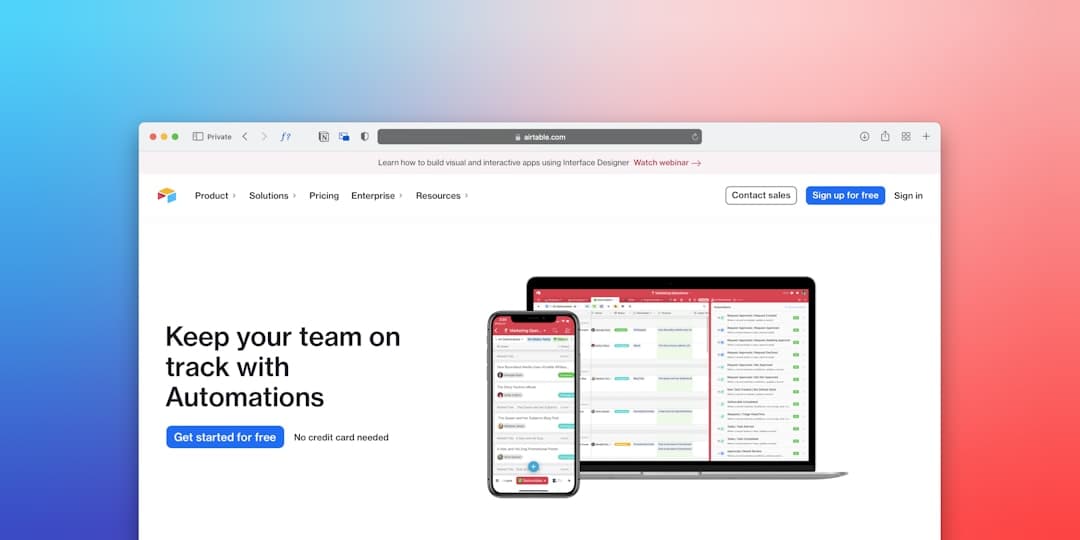
Every website form, referral email, Instagram message, and calendar request should land in one place. I like HubSpot for businesses that need a fuller CRM, and Airtable for founders who need a more flexible operating database. Zapier or Make can send incoming leads from forms, email, and scheduling tools into either one.
The automation should create a record, tag the lead source, assign a service category, and notify the right person. If you are still searching your inbox for the name of someone who asked about working together three weeks ago, this is the first thing to fix.
2. Send the first response and qualify the fit.
A fast reply does not need to be a robotic reply. It can be a warm message that confirms the inquiry arrived, sets expectations, and asks two or three useful questions before a call. Typeform or Tally can collect budget range, timeline, project scope, or venue details. Calendly can offer the right meeting type based on the answers.
For AI for consultants and AI for agencies, this is especially useful because the first call often gets overloaded with basic fact gathering. Let the form handle the basics. Let the conversation be about the actual problem.
I would not automate a fake personal note pretending I wrote it. People can feel that. I would automate the receipt, the routing, and the questions that make the first real conversation better.
Turn a signed agreement into a real starting point
The handoff between sales and delivery is where founder-led businesses lose a ridiculous amount of time. The client has said yes, money has changed hands, and then everyone asks, “What happens now?”
That question should not require you.
3. Generate proposals, agreements, and payment steps from a template.
Use a proposal tool like PandaDoc or Better Proposals with service packages, scope language, payment schedules, and terms already built in. Once a prospect is marked ready, a workflow can pull their name, company, service choice, and price into the right document.
Stripe or QuickBooks can then send the deposit invoice automatically once the agreement is signed. The point is not to remove your judgment around pricing or scope. The point is to stop rebuilding the same document every time somebody wants your standard package.
I have seen founders spend 45 minutes formatting a proposal after every sales call. Over a year, that becomes a serious amount of time spent moving logos around a page.
4. Build a client onboarding sequence that starts itself.
Client onboarding automation is one of the cleanest places to begin because the sequence is usually predictable. A signed agreement should trigger a welcome email, a kickoff scheduler, an intake form, a shared folder, and a project record.
ClickUp, Asana, or Monday.com can create a project from a template. Google Drive can generate a client folder from a standard structure. Then Make or Zapier can connect the signed agreement to those tools without somebody copying details by hand.
For a retreat operator, the intake might collect dietary needs, room preferences, and arrival times. For an accountant, it might request prior-year returns and bookkeeping access. For a design studio, it might gather brand files, decision-makers, and launch dates.
The details change. The pattern does not.
A good onboarding flow tells clients what happens next before they have to ask. That sets you up for success, and it makes the business feel calmer from the first week.
Keep delivery moving without becoming the project tracker
Most founders are not the bottleneck because they are bad at their craft. They become the bottleneck because every status question, missing file, approval request, and meeting note comes back to them.
The people who scale are not less caring. They have clearer places for work to live.
5. Turn calls into organized next steps.
Use Fathom, Fireflies, or Otter to record and transcribe client calls with permission. Then use an AI step in Zapier or Make to turn the transcript into a summary, decisions, action items, owners, and due dates.
That output can go into ClickUp, Notion, or your CRM. The client can receive a clean recap by email. Your team can see what they own. You do not need to spend your evening trying to remember whether the client approved version two or wanted another revision.
This is not about replacing attention during a meeting. I still take notes when something matters. It is about having a second set of hands that does not forget the follow-up list.
6. Send status updates and approval reminders.
Clients do not usually get annoyed by a project taking time. They get annoyed when they have no idea what is happening. A simple weekly update can pull completed tasks, current work, blocked items, and the next decision needed from your project system.
Build the update in Asana or ClickUp, then send it through Gmail or Outlook on a schedule. For approvals, use a form in Fillout or Typeform that logs the response directly against the project record. If a client has not responded after a few days, the system can send one polite reminder.
This is where founder operations systems become very useful. The system does not make promises you cannot keep. It shows the truth of the work in a consistent way.
Close the loop after delivery, then protect the relationship
The end of a project is often the beginning of a long-term relationship. It is also where many businesses disappear until they need another sale. That is boring for the client, and it leaves good work sitting on the table.
7. Automate project closeout, feedback, and the right follow-up.
When a project reaches completion, trigger a closeout checklist in ClickUp or Airtable. That checklist can confirm final files were delivered, access was removed where needed, invoices were paid, and internal notes were saved.
Then send a feedback request through Google Forms, Typeform, or a short email sequence. If the client gives positive feedback, flag the account for a personal testimonial request. If they report an issue, create a task for a real human to handle it quickly.
CRM and follow-up automation also helps you stay connected after delivery. HubSpot or ActiveCampaign can create a reminder for a personal check-in at 30, 90, or 180 days. I would keep these messages specific. A generic “just checking in” email is easy to ignore. A note about their launch, their busy season, or a result you helped create is real human connection.
Before you hire an operations manager, map these seven tasks on one page. Write down what triggers each task, where the information lives, who owns the next step, and what happens when something goes wrong. Then automate the parts that are repetitive and rules-based.
An operations manager can become incredibly valuable once there is a system worth improving. Without that foundation, you are hiring someone to chase the same loose ends that are already exhausting you. If you want a clearer comparison between building internal infrastructure and relying on outside support, I break that down at Mastermind vs. L. I also teach the practical building blocks in the AI workshop.
If this resonates and you want to build this kind of infrastructure in your own business, the Mastermind is where we do the work live. You can learn more at mastermindshq.business.